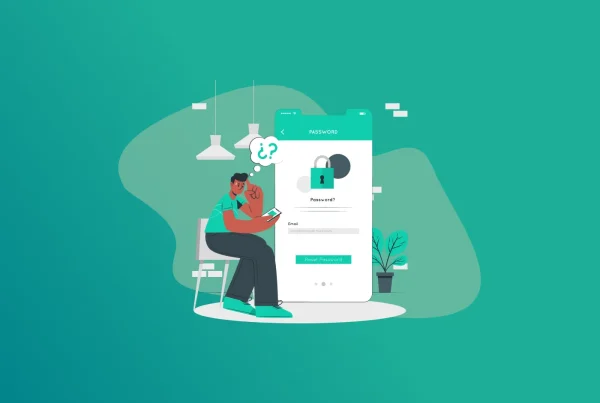

A password is one of the most important key components of maintaining security and privacy. It can be for your media apps, your devices, or even a password for a secret clubhouse. All lead to one purpose: keeping out unwanted or uninvited entities from reaching that secured space or object. However, to maintain a high level of security, a password policy is essential.
This guide helps you understand what a password policy is, why it’s important to maintain in corporations, and why employees and system admins need to learn essential practices for it.
TIP – To maintain effective security for your passwords, especially for official reasons, consider using the best password manager.
Generate passkeys, store them in vaults, and safeguard sensitive data! Receive the latest updates, trending posts, new package deals,and more from FastestPass via our email newsletter.
By subscribing to FastestPass, you agree to receive the latest cybersecurity news, tips, product updates, and admin resources. You also agree to FastestPass' Privacy Policy.
Secure and Create Stronger Passwords Now!
Subscribe to Our Newsletter
What is a Password Policy?
A password policy is an organization’s formal standards for creating and managing passwords in order to enforce the best kind of security for its files, data, internet connection, systems, and more.
These password policies require users to create secure, unique credentials to mitigate unauthorized access and cybersecurity threats. Some of the specifications typically require minimum length, a variety of characters, and their expiration date; all are technically enforced to safeguard sensitive systems and information.
Key Components of a Solid Password Policy
They are as follows:
- The length of the password matters, and so does its complexity. It typically requires a minimum of 12-16 characters, with numbers, upper and lowercase characters, symbols, etc.
- A policy of reusing the same password. It prevents users from using one password for multiple accounts, and it cannot be reused or repeated.
- It urges users to change their passwords quite often to maintain effective security.
- Password policies also enforce account lockouts after a few incorrect entries.
- It often recommends enabling multi-factor authentication.
Why is it Important to Create Stronger Password Management Policies and Management?
Establishing stringent password policies and employing dedicated management tools is essential for securing confidential personal and business information.
This necessity is underscored by the fact that weak or compromised login passwords contribute to more than half of all security incidents and flaws.
An effective password policy and tools are important to enhance security. It helps enforce complex credentials, defends against automated attacks, and ensures compliance with legal standards, blocking illegitimate account entries. Stronger password management collectively lowers the risk of identity fraud and financial theft.
Here are its main benefits:
- Blocks unauthorized entries: Simple passwords are vulnerable to systematic cracking attempts. Enforcing requirements for length and complexity creates a vital protective shield.
- Reduces breaches and exposure: If one set of credentials is compromised from one service, it often opens access to others if passwords are reused. It’s best to keep a distinct password for all accounts to prevent damage.
- Setting a standard for strengthening security: Adhering to formal password guidelines helps organizations meet regulatory requirements. This helps prevent financial penalties and reputational harm.
- Gaining efficiency with software or tools: Password management applications securely store and create complex passwords. This helps those who can’t remember a password, decreasing the time lost to password recovery procedures.
Why Do You Need a Password Policy?
A strong password policy forms one of the foundational layers of an organization’s security. It requires every employee to follow its clear guidelines. These policies are what actively prevent the use of weak, stolen, or repeated passwords.
These insecure practices open the door to unauthorized account access and common credential-based attacks. This is where an effective password policy comes in. It helps protect sensitive accounts, ensures that effective security practices are maintained across teams, and supports compliance with industry regulations.
Ultimately, it reduces the overall risk of security incidents by promoting responsible password habits enterprise-wide.
Best Password Policy Security Guidelines of Industry Standards
These are as follows:
NIST (National Institute of Standards and Technology) Special Publication 800-63B
This is the leading modern standard. Here is what it abides by:
- Minimum 8-character length (with 12+ strongly recommended).
- Screening against breach dictionaries and denylists.
- Removing complexity requirements and periodic forced resets.
- Prioritizing MFA implementation.
ISO/IEC 27001
The information security management standard requires organizations to define and implement formal password policies. This is part of its access control (A.9.2) and cryptography (A.10.1) controls.
PCI DSS (Payment Card Industry Data Security Standard)
Requirement 8 mandates strong password policies (minimum length, complexity, change intervals) for all users with access to cardholder data, alongside MFA for remote access.
CIS (Center for Internet Security) Controls
Critical Security Control 5 (Account Management) and Control 6 (Access Control Management) mandate password policy creation, MFA, and the management of privileged credentials.
Corporate Password Policy Practices Recommended for Security
Now that you’ve seen the industry-level password policy framework, here are some of the best security practices for a password policy:
Longer Passwords
This is one of the most common yet most important security measures that every password policy needs to incorporate. Hackers frequently attempt to breach accounts using various techniques, including brute force attacks.
This method employs automated software that systematically comes up with every possible combination of letters, numbers, and symbols until it generates the correct password.
However, if you add a good number of characters in a password, it increases the time required to crack it. This is why it’s important to use a mix of numbers, symbols, uppercase, and lowercase letters; it significantly complicates this process. Therefore, the most secure defense is a password that is both lengthy and complex.
Leave Out Personal Details
It’s quite common for most users to create passwords with personal details. Do you have any idea how dangerous that is? There are many who can’t seem to remember passwords, considering they’re managing multiple accounts and apps on a daily basis. Because of this, most create passwords with birthdates, favorite colors, names of pets, etc.
Data like this makes your passwords extremely vulnerable and susceptible to attacks. Instead, always use special characters and terms that are not often thought about. For instance, you can use a famous idiom with special characters like: Breakaleg, but, instead of the simple format, you can create it as Br3ak@L3g.
Don’t Reuse Passwords
Just as you shouldn’t create passwords with personal and identifiable data, the same way, you shouldn’t use the same passwords again. Most large-scale attacks or data breaches often happen because of reused passwords.
For instance, if your Facebook and banking app passwords are the same, and one gets hacked, you lose access to both accounts. For this reason, always keep a different password for all your accounts, apps, devices, etc.
Change Compromised Passwords Immediately
Data breaches are common. If a service you use is breached, you need to change that password immediately.
A compromised or stolen password is often posted online, and using one makes you vulnerable to further attacks. Security experts now advise changing passwords about once a year. Forcing changes too often, for instance, every 90 days, often leads to weak, predictable passwords, which reduces security.
Never Share Your Passwords, Especially via Email or Text
It is extremely risky to send your login credentials via email or text message. It doesn’t matter how much you trust the recipient; your username and password can be leaked if their email account is hacked or their device is lost.
For safe data sharing, always use a dedicated, secure method; for instance, a password manager is the most trusted feature and source.
Scan for Common and Vulnerable Passwords
It’s an important rule in the NIST SP800-63B password policy standard to check any new password against a database. You need to see if they match a list of commonly used, predictable, or previously breached passwords. Specialized enterprise security software is designed to perform this check automatically, helping organizations easily comply with this guideline.
Run Password Audits
It is crucial to monitor your team’s cooperation with password security rules. Conducting regular audits helps verify compliance with the policy. This allows you to find and update any weak or non-compliant passwords.
Prevent Password Recycling
It’s important that companies guide their employees to ditch the concept of recycling passwords. This doesn’t help anyone, and it most certainly worsens security. There are many situations where users change their passwords using the same base letters and only switch around some numbers. This does nothing but leave your files, apps, devices, etc. vulnerable.
Should There Be Password Policy Management Practices for Teams?
Yes, it’s crucial to incorporate effective practices for password police management for teams. These practices include:
- Never save passwords in unencrypted formats.
- Prohibiting the storage of passwords in web browsers.
- Implementing Multi-Factor Authentication (MFA) and Single Sign-On (SSO).
- To limit the number of login attempts.
- It’s encouraged to update or revoke passwords for all shared accounts as soon as an employee leaves.
- Restricting access to company systems from public, unknown, or unsecured computers.
FAQs – Password Policy
The most crucial structure examples are: longer character volume, not using password recycling, enabling Multi-Factor authentication, limiting too many failed attempt sign-ins, etc. A password policy is a list of formal rules and procedures that help strengthen security. It helps mandate how to create and manage robust password credentials. It helps prevent unauthorized access to private accounts and to prevent security incidents. Through these policies, the establishment standards include minimum length passwords, a required character variety, and mandatory periodic updates. Yes, it is important, especially to add security against data breaches. Password theft or compromise is among the biggest breaches. This is why a password policy helps prevent it, and also sets the standard for employee use. Right now, the best modern-day policy standard is the NIST Digital Identity Guidelines. It requires a minimum of 15 characters.
To Conclude
Coming towards the end of this guide on the best password policy practices, you now have a clearer idea of them. Passwords are not something to be taken lightly. Think of it as a key to everything that you own that is only meant for your access or for limited persons.
This guide helps both corporations and employees understand the importance of strong passwords and the practices that help shape the security standards.
Other than this, businesses or industries need to invest in the best password managers. It not only helps generate unique passwords but also lets you save sensitive data, passwords, images, and more in its security vault. This tool helps increase the level of data and device protection in any setting.
Generate passkeys, store them in vaults, and safeguard sensitive data! Receive the latest updates, trending posts, new package deals,and more from FastestPass via our email newsletter.
By subscribing to FastestPass, you agree to receive the latest cybersecurity news, tips, product updates, and admin resources. You also agree to FastestPass' Privacy Policy.
Secure and Create Stronger Passwords Now!
Subscribe to Our Newsletter